The Complete Guide to Print File Preparation for Photography Competitions
TK Broecker / 10 May 2026
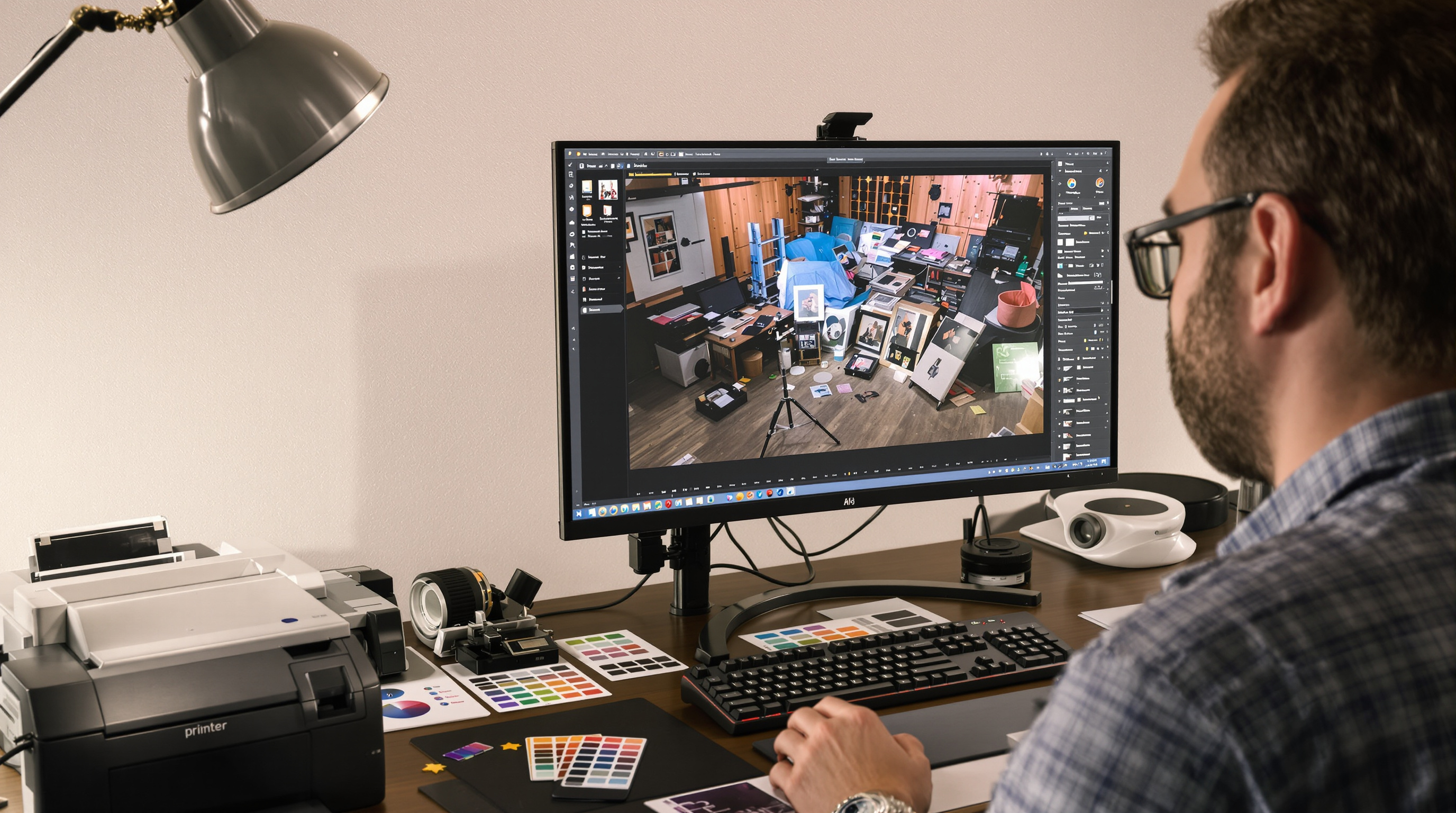
Entering a print competition is one of the most rewarding challenges a photographer can pursue — but even a stunning image can fall short if the file isn't prepared correctly. From choosing the right color space to hitting exact resolution requirements, the technical side of competition print file preparation is just as important as the artistry itself. This guide breaks down everything you need to know to submit with confidence.
Understanding PPA and IPC Print File Specifications
The Professional Photographers of America (PPA) and the International Photographic Competition (IPC) are two of the most prestigious bodies governing print competitions in the United States. Each has specific, non-negotiable file submission standards that photographers must follow or risk disqualification.
For PPA competitions, the general requirements for digital print entry files are:
- Maximum file size: 5 MB (for loan collection digital submission)
- Color space: sRGB
- File format: JPEG
- Maximum pixel dimensions: 4800 x 3600 pixels on the longest edge
- Minimum resolution for printed pieces: 300 PPI at final print size
For the IPC (which operates under PPA's umbrella for national and international levels), the same core standards generally apply, though individual affiliated guilds and state organizations may add their own local requirements. Always verify with the specific competition you're entering, as specs can be updated annually.
Choosing the Right Color Space — sRGB vs Adobe RGB
One of the most debated topics in competition print prep is the choice between sRGB and Adobe RGB (1998). Understanding the difference is critical.
sRGB (standard Red Green Blue) was developed jointly by HP and Microsoft in 1996 and is the standard color space for the web, most consumer monitors, and the vast majority of printing workflows. It covers approximately 35% of the CIE 1931 color space.
Adobe RGB (1998) was developed by Adobe Systems and covers a significantly wider gamut — approximately 50% of the CIE 1931 color space — particularly in the cyan-green range. It is widely used in professional print workflows, especially for offset printing.
For PPA and IPC competitions, sRGB is the required color space. Here's why this matters in practice:
- If you submit a file tagged as Adobe RGB but the competition's system interprets it as sRGB, colors will appear dull and desaturated — a significant penalty in judging.
- Always convert to sRGB as the final step before export, not just assign the profile.
- Use Photoshop's Edit > Convert to Profile rather than Assign Profile to ensure an accurate color conversion.
Even if your working color space is Adobe RGB or ProPhoto RGB throughout your editing process, the final exported JPEG must be in sRGB for competition submission.
Resolution, Pixel Dimensions, and Print Size Requirements
Resolution for print competitions is a nuanced topic. The term PPI (pixels per inch) refers to the pixel density of a printed image and directly affects perceived sharpness at a given print size.
For competition prints, a minimum of 300 PPI at the intended print size is the industry standard and the PPA guideline. This means:
- A 16x20 inch print requires a minimum of 4800 x 6000 pixels in the source file.
- A 20x24 inch print requires a minimum of 6000 x 7200 pixels.
For digital submission files (as opposed to physical prints), PPA caps the longest edge at 4800 pixels regardless of intended print size. This is a file management and standardization requirement, not a reflection of final print resolution.
When upsampling is necessary — for example, if your original file doesn't have enough pixels — use AI-based upsampling tools such as Adobe Photoshop's Super Resolution, Topaz Gigapixel AI, or Lightroom's Enhance feature. These tools produce far superior results compared to traditional bicubic interpolation, especially for fine detail and edge sharpness critical in competition judging.
Final File Export Checklist for Competition Submission
Before you hit submit, run through this essential checklist to ensure your file is technically flawless:
- Color space: Converted to sRGB (not just assigned)
- File format: JPEG, saved at maximum quality (Quality 12 in Photoshop, or 100 in Lightroom)
- Pixel dimensions: Within the competition's specified maximum (e.g., 4800px on the longest edge for PPA digital entries)
- File size: Under the maximum allowed (typically 5 MB for PPA)
- Sharpening: Output sharpening applied for the intended medium (print or screen), using tools like Lightroom's Output Sharpening or Photoshop's Unsharp Mask
- Metadata: Check competition rules — some require metadata to be stripped for blind judging, others require specific fields filled in
- Proof your file: Use a soft proof in Photoshop (View > Proof Colors) with your printer's ICC profile before final export, especially for physical prints
- Monitor calibration: Ensure your display is calibrated to a standard target (D65 white point, 120 cd/m² luminance) so what you see reflects reality
If submitting a physical print to a competition, additional considerations include the print medium (lustre, metallic, canvas, fine art paper), the backing requirements, and whether the print must be mounted or framed. Always consult the specific competition's current prospectus for these details, as they vary widely.
Conclusion
Preparing a competition print file is a discipline in itself — one that rewards those who understand the interplay between color management, resolution, and submission standards. By working in a wide-gamut editing space, converting carefully to sRGB, meeting PPA and IPC pixel and file size requirements, and following a rigorous export checklist, you give your image the technical foundation it needs to be judged purely on its artistic merit. Precision in preparation is the final act of craftsmanship.