Mastering Volume Photo Order Packaging and Delivery for Photographers in Louisville and Beyond
TK Broecker / 19 April 2026
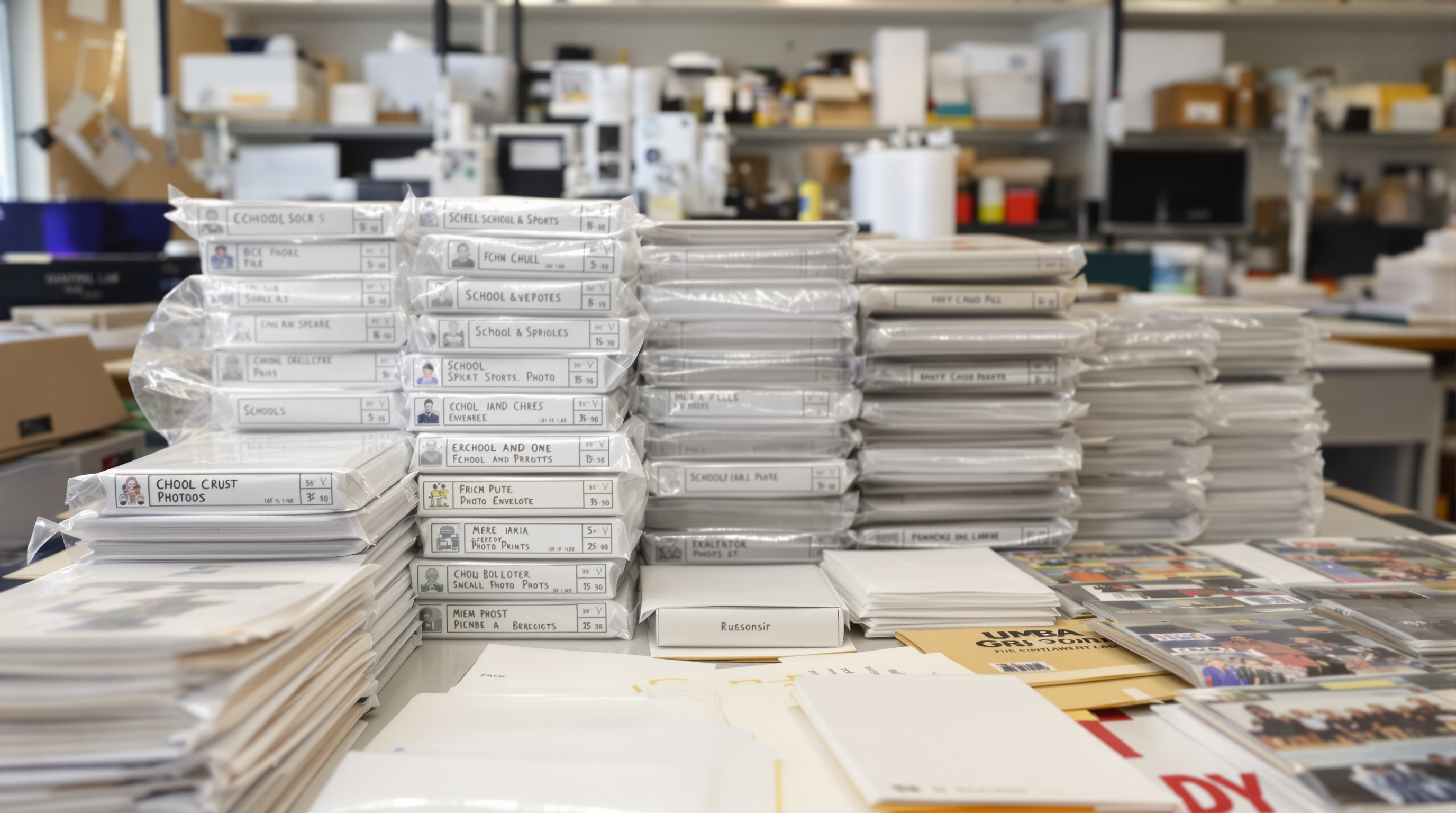
For professional photographers who specialize in volume work — school portraits, sports leagues, and group events — the post-shoot workflow is just as important as the session itself. Packaging and delivering large photo orders efficiently and safely is a skill that separates thriving studios from struggling ones. Whether you're based in Louisville or operating nationwide, mastering bulk photo fulfillment can protect your reputation and your bottom line.
Understanding the Scale of Volume Photography Fulfillment
Volume photography — including school photos, sports team packages, and church or corporate group portraits — involves processing hundreds or even thousands of individual orders from a single event. Each order typically contains multiple prints in different sizes, digital downloads, photo novelties like buttons or keychains, and a printed order form that must match exactly to the right child or subject.
The challenge is not just printing — it's sorting, verifying, packaging, labeling, and distributing each unit accurately. A single mismatch can cause complaints, reprints, and damage to client relationships, especially when the client is a school principal or a youth sports league coordinator.
Professional Packaging Standards for Bulk Photo Orders
When it comes to packaging, professional photo labs and volume photographers follow a set of best practices to ensure prints arrive in perfect condition:
- Rigid mailers and backing boards: Standard prints should always be sandwiched between acid-free cardboard backing and sealed in a rigid or semi-rigid mailer to prevent bending during transit or handling.
- Poly bags and envelopes: Individual orders are typically placed in clear poly bags or branded envelopes for organization and moisture protection.
- Bundle labeling: Each package should be clearly labeled with the subject's name, class or team, and order number. Color-coded labels or stickers by grade level or team can dramatically speed up distribution.
- Master carton organization: Individual packages are then grouped into master cartons organized by class, team, or alphabetical order — whatever makes distribution at the destination easiest.
- Packing slips and manifests: A printed manifest listing all orders inside a carton should be included on the outside of each box for quick verification upon receipt.
Many professional photo labs now use automated sorting systems integrated with order management software to reduce human error in the packaging phase. For smaller studios doing in-house fulfillment, investing in barcode scanners and order management platforms like Fotomerchant, Strawberry Worldwide, or Photoday can replicate this efficiency at scale.
Delivery Logistics for School and Sports Photo Orders
Once orders are packaged, the delivery phase begins. For school photo delivery, packages are typically shipped to the school in bulk, where teachers or administrators distribute them to students. This means your packaging must be distribution-ready — easy for a non-photography professional to sort and hand out without confusion.
For sports photo packages, delivery may go to a league coordinator, a team manager, or directly to individual families depending on how the order was placed. Direct-to-consumer shipping is growing in popularity, especially when paired with online ordering platforms that collect shipping addresses at checkout.
Key logistics considerations include:
- Shipping carriers: USPS, UPS, and FedEx all offer options suitable for photo deliveries. For fragile or high-value packages, FedEx and UPS tend to offer better tracking and handling guarantees.
- Delivery timing: School photo orders are often time-sensitive, tied to school calendars. Communicating realistic turnaround times — typically 2 to 4 weeks from shoot date to delivery — and sticking to them is essential.
- Local delivery in Louisville: Photographers operating in the Louisville, Kentucky area may choose to handle local deliveries themselves or through a local courier service for tighter control over timing and condition of packages.
- Proof of delivery: Always obtain proof of delivery for bulk school or sports orders — signature confirmation or photo documentation at drop-off protects you from disputes.
Building an Efficient Volume Photography Delivery Workflow
The most successful volume photographers treat fulfillment as a repeatable, documented workflow rather than an ad hoc process. Here's how to build one:
- Start with order management software: Platforms designed for volume photography handle online ordering, payment, and export of print-ready files organized by subject — eliminating manual data entry errors.
- Partner with a professional photo lab: Labs specializing in volume orders — such as Miller's Professional Imaging, ROES-compatible labs, or regional labs in the Louisville area — offer packaging services, drop-shipping, and bulk pricing that make fulfillment far more scalable than in-house printing.
- Create a packaging checklist: A step-by-step checklist for every order run reduces errors. Include steps for print verification, bagging, labeling, bundle assembly, and manifest creation.
- Schedule buffer time: Always build buffer days into your timeline for reprint requests, shipping delays, or damaged goods. Communicating proactively with schools and leagues about status keeps anxiety low on their end.
- Document and improve: After each volume delivery, review what went wrong and what went right. Continuous process improvement is what separates amateur volume shooters from true professionals.
Conclusion
Volume photo order packaging and delivery is one of the most underestimated aspects of professional photography. By investing in proper packaging materials, smart logistics planning, reliable lab partnerships, and a documented workflow, photographers — whether in Louisville or anywhere in the country — can fulfill hundreds of orders with precision and professionalism. A seamless delivery experience is the final impression you leave with clients, and it matters just as much as the photos themselves.