Giclée Printing in Louisville Kentucky — Fine Art Reproduction at Its Finest
TK Broecker / 14 June 2026
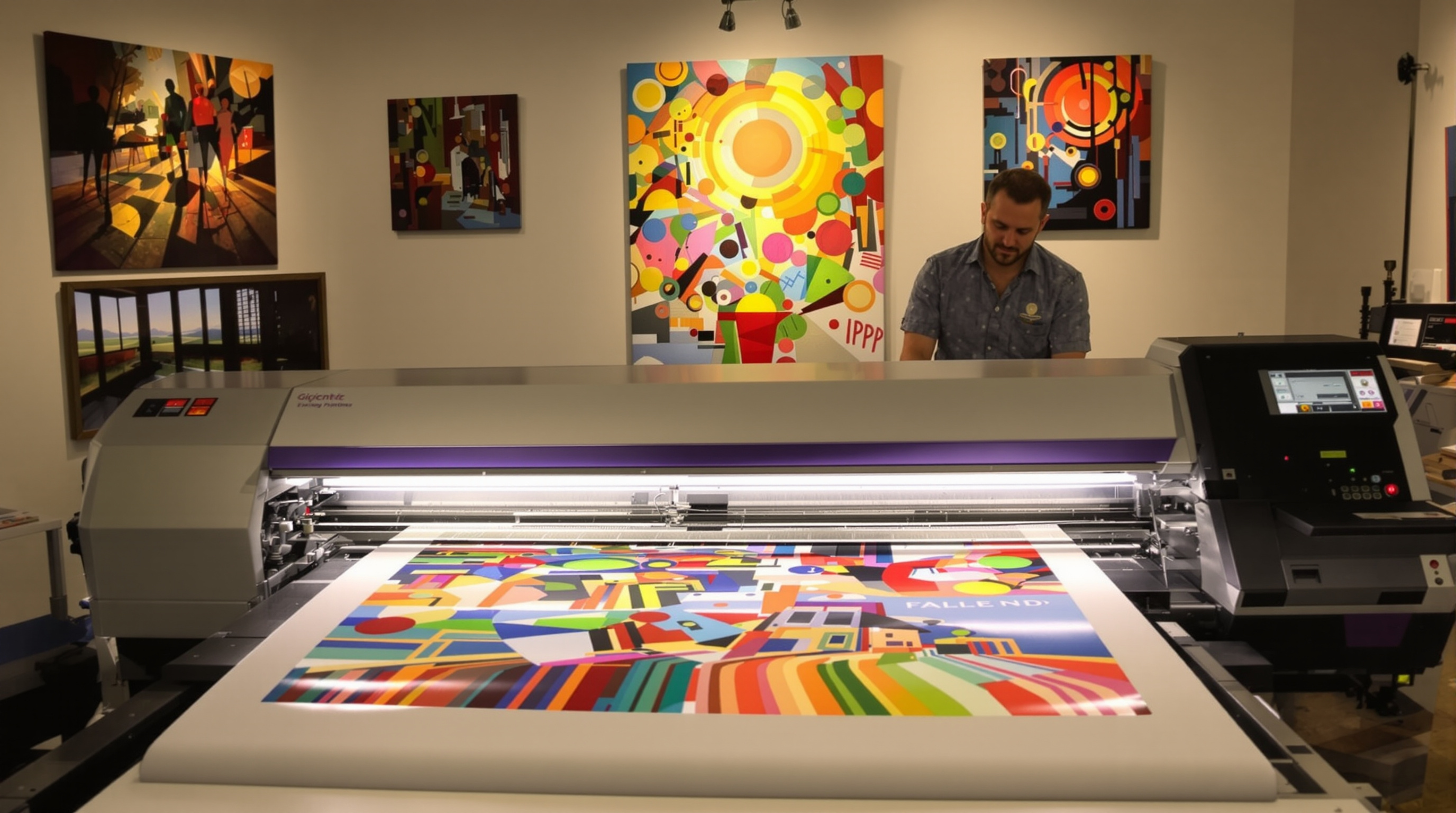
If you're an artist, photographer, or collector in Louisville, Kentucky, you've likely heard the word giclée — but what does it actually mean, and why does it matter? Giclée printing has revolutionized fine art reproduction, offering museum-quality results that standard printing simply cannot match. In this guide, we explore what giclée is, how it compares to conventional canvas printing, and what to look for in a professional giclée lab.
What Is Giclée Printing?
The term giclée (pronounced zhee-KLAY) comes from the French verb gicler, meaning "to squirt" or "to spray." It was coined in the early 1990s by printmaker Jack Duganne to describe a new class of high-resolution, inkjet-based fine art prints. Unlike traditional offset or screen printing, giclée uses large-format inkjet printers — typically from manufacturers like Epson or Canon — equipped with archival pigment-based inks that are sprayed onto the substrate in microscopic droplets, sometimes as small as 2 picoliters.
The result is an image with an extraordinarily wide color gamut, smooth tonal gradations, and sharp detail. Modern giclée printers can reproduce over 16 million colors, far exceeding what the human eye can distinguish in most viewing conditions. Substrates used in giclée printing include:
- Cotton rag paper (acid-free, museum-grade)
- Canvas (polyester-cotton blends or 100% cotton)
- Fine art baryta paper (for photographic reproductions)
- Watercolor paper
When printed with archival pigment inks on acid-free media, giclée prints can last 100 years or more without significant fading, especially when stored away from direct UV light — a key reason galleries and museums prefer them for fine art reproduction.
Giclée vs Standard Canvas Print — What's the Real Difference?
Many consumers confuse giclée canvas prints with the mass-market canvas prints commonly sold online. The differences are substantial and worth understanding before commissioning a reproduction.
Ink type is the most critical factor. Standard canvas prints are often produced with dye-based inks, which are vibrant immediately after printing but fade significantly within 10–25 years, especially under UV exposure. Giclée prints use pigment-based inks, which bond more deeply with the substrate and resist UV degradation far more effectively.
Resolution is another major differentiator. Professional giclée printers typically output at 1440 to 2880 dots per inch (DPI), compared to 720 DPI or less for many consumer-grade canvas print services. This matters enormously when reproducing fine brushwork, subtle textures, or photographic detail.
Color accuracy and profiling set professional giclée labs apart. A reputable lab will use ICC color profiles specific to each paper and ink combination, and will perform soft proofing to ensure the digital file accurately translates to the physical print. This level of color management is rarely offered by standard online print services.
Finally, substrate quality differs dramatically. Professional giclée substrates are acid-free, lignin-free, and often OBA-free (free of optical brightening agents that degrade over time), ensuring the archival integrity of the final work.
Archival Giclée Prints — Why Artists and Collectors Demand Them
For working artists, the ability to produce limited edition archival reproductions of original works is a critical revenue stream and a way to reach a broader audience without parting with the original. Giclée technology makes it possible to create prints so faithful to the original that even trained eyes often struggle to distinguish them from a close viewing distance.
When selling limited edition giclée prints, artists typically:
- Number each print in the edition (e.g., 12/50)
- Sign each print by hand
- Issue a certificate of authenticity
- Use archival sleeves and backing boards for storage and shipping
Collectors prize archival giclée prints precisely because of their longevity. A print rated for 100+ years of display life under normal indoor conditions (as tested by Wilhelm Imaging Research, the industry authority on print longevity) holds genuine value as a collectible object. This is why many galleries in Louisville and across the United States now accept giclée editions as legitimate gallery merchandise alongside original works.
For photographers, giclée on fine art baryta paper or cotton rag offers a tactile, painterly quality that elevates an image beyond the clinical feel of standard photo paper, making it ideal for exhibition and sale.
Professional Giclée Printing Services in Louisville Kentucky
Louisville, Kentucky has a growing arts community, and with it, a demand for professional-grade reproduction services. When evaluating a professional giclée printing service in Louisville, here are the key criteria to look for:
- Equipment — Look for labs using Epson SureColor P-series or Canon imagePROGRAF Pro-series printers, which are the industry standard for fine art output.
- Ink system — Confirm the lab uses UltraChrome or equivalent 10–12 color archival pigment ink sets, which deliver a wider color gamut and better longevity than standard 4-color systems.
- Substrate selection — A professional lab should offer a curated selection of museum-quality papers and canvases, not just one generic substrate.
- Color management workflow — Ask whether the lab creates custom ICC profiles per substrate and whether they offer proofing services.
- File preparation support — The best labs help artists optimize their digital files for print, advising on resolution, color space (ideally Adobe RGB or ProPhoto RGB), and file format.
A truly professional giclée art reproduction lab in Louisville will also treat your work with care — handling original canvases or artwork for high-resolution scanning if needed, and packaging finished prints with archival materials to prevent damage in transit.
Whether you're a Louisville-based painter looking to reproduce a series of originals, a photographer preparing work for a gallery show, or a collector seeking restoration reproductions of damaged pieces, choosing the right local giclée printing partner makes all the difference in the quality, integrity, and longevity of the final product.
Conclusion
Giclée printing stands in a category of its own when it comes to fine art reproduction. With archival pigment inks, museum-grade substrates, and precision color management, it far surpasses standard canvas printing in quality and longevity. For artists and collectors in Louisville, Kentucky, partnering with a professional giclée art reproduction lab ensures your work is presented — and preserved — at the highest possible standard.