Artist Proof Canvas Reproduction in Louisville — A Complete Guide to the Proofing Process
TK Broecker / 28 June 2026
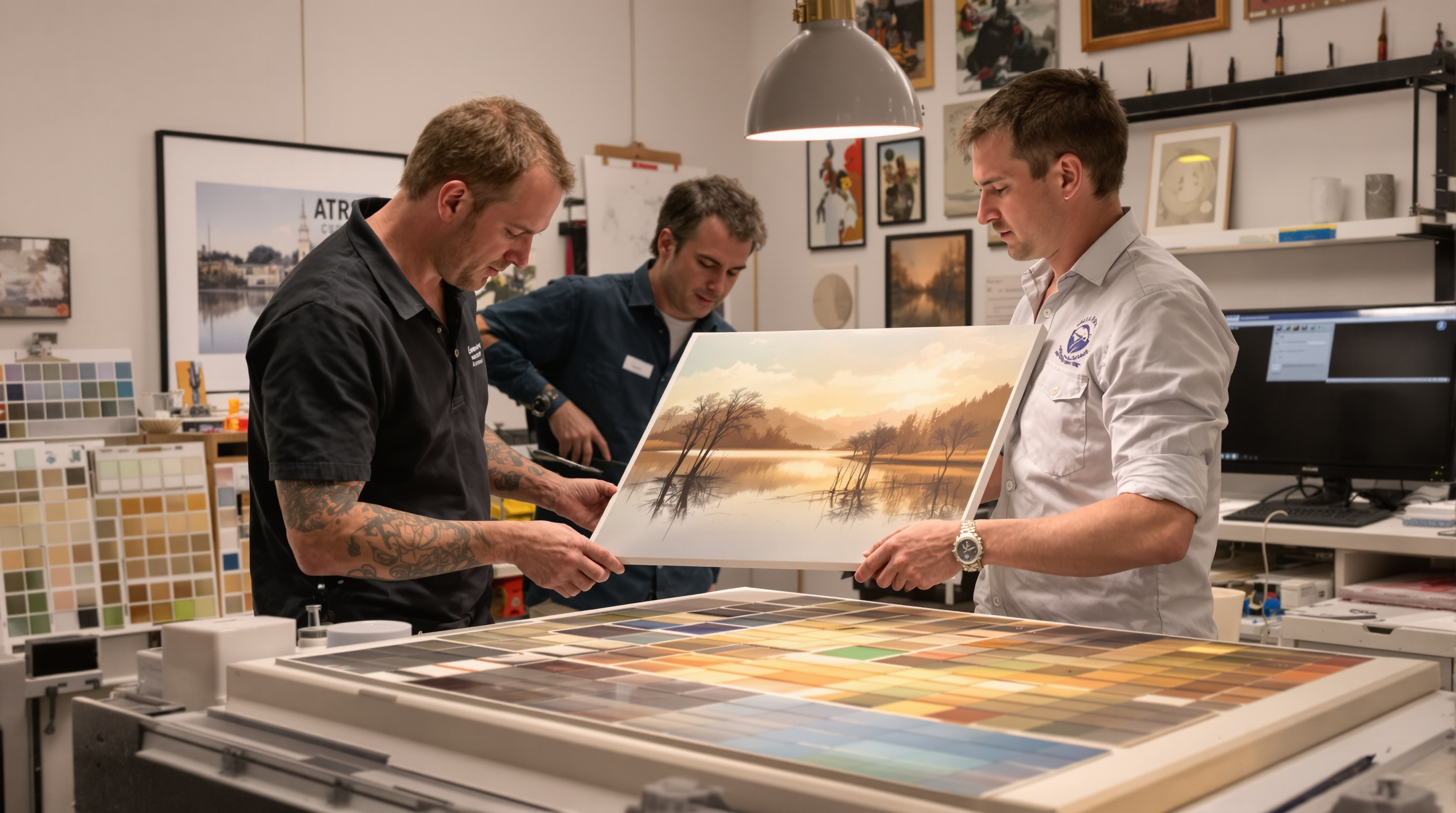
When it comes to reproducing fine artwork on canvas, precision is everything. Whether you are an artist in Louisville looking to produce limited edition prints or a collector seeking faithful duplicates, the artist proof canvas reproduction process is the critical step that ensures your final prints match the original as closely as possible. Understanding how proofing works — and why it matters — can make the difference between a stunning reproduction and a disappointing one.
What Is an Artist Proof in Canvas Reproduction?
The term artist proof (often abbreviated as A/P) originates from the traditional printmaking world, where the first prints pulled from a plate were reserved for the artist to inspect and approve before the main edition was produced. In the context of canvas reproduction and giclée printing, an artist proof serves the same fundamental purpose: it is a pre-production sample printed on the same substrate and with the same inks intended for the final edition, submitted to the artist for review and approval before full-scale printing begins.
In Louisville's growing fine art print market, reputable reproduction studios will always offer at least one artist proof before committing to a full run. This proof is not a rough draft — it is produced with the same care and calibration as the final pieces. The artist examines it under standardized lighting conditions (typically D50 or D65 illuminant, which simulate natural daylight) to evaluate color fidelity, contrast, sharpness, and overall visual impact.
The Giclée Proofing Workflow Step by Step
The proofing workflow for a canvas reproduction involves several precise technical stages:
- High-resolution scanning or photography: The original artwork is captured at a minimum of 600 DPI (dots per inch), though many Louisville studios scan at 1200 DPI or higher for large-format pieces. Spectrophotometric imaging may also be used to capture colors beyond the visible spectrum of a standard camera.
- Color profile assignment and ICC profile management: The digital file is tagged with a color profile (commonly Adobe RGB 1998 or ProPhoto RGB) to ensure consistent color representation across devices. The printer's ICC profile for the specific canvas substrate is then applied during the soft-proofing stage in software such as Adobe Photoshop or Lightroom.
- Soft proofing on a calibrated monitor: Before any ink touches canvas, the reproduction technician performs a soft proof — a digital simulation on a color-calibrated monitor of how the image will look when printed. This step reveals any out-of-gamut colors that the printer cannot reproduce and allows for manual adjustments.
- Hard proof printing: A physical hard proof is printed on the actual canvas material using the intended inkset (typically archival pigment inks in a wide-gamut giclée printer). This is the artist proof the artist will review.
- Artist review and approval: The artist compares the hard proof to the original under standardized lighting. They may request color corrections — adjustments to hue, saturation, brightness, or shadow detail — before signing off.
- Iteration if needed: If corrections are requested, the technician adjusts the digital file and prints a second proof. This iteration continues until the artist approves the result.
Color Accuracy and the Science Behind It
Achieving color accuracy in canvas reproduction is a deeply technical endeavor. The challenge lies in the fact that original paintings are created with pigments that reflect light across a very wide color gamut — often far wider than any printer can replicate. Oils, acrylics, and watercolors interact with light in complex ways, including metamerism (where colors appear to match under one light source but differ under another), which makes the proofing environment critically important.
Studios in Louisville that specialize in fine art reproduction use instruments such as spectrophotometers (e.g., X-Rite i1Pro) to measure color values numerically using the CIE Lab color space, which is device-independent and perceptually uniform. By comparing the Lab values of the original artwork to the printed proof, technicians can quantify the Delta-E (ΔE) — a numerical measure of color difference. A ΔE of less than 2 is generally considered imperceptible to the human eye and is the benchmark many professional studios strive for.
The canvas substrate itself plays a significant role. Poly-cotton blends, natural cotton, and linen canvases all absorb ink differently and affect the final color output. A proof printed on the wrong substrate is essentially meaningless, which is why reputable studios always proof on the exact material that will be used for production.
Why the Artist Proof Matters for Limited Edition Prints
Beyond its technical function, the artist proof holds significant artistic and commercial value. In the fine art market, artist proofs are traditionally numbered separately from the main edition (e.g., AP 1/5) and are often considered more exclusive, sometimes commanding higher prices at auction or in galleries. For Louisville-based artists producing limited edition canvas reproductions, the artist proof represents both a quality checkpoint and a collectible artifact.
From a legal and ethical standpoint, the artist's signature on an approved proof also establishes a documented record of intent — confirming that the reproduction was produced with the artist's knowledge and meets their standards. This is particularly important for posthumous reproductions or estate-authorized prints, where provenance documentation is essential.
Choosing a Louisville reproduction studio that takes the artist proof process seriously — offering physical hard proofs, color measurement tools, and patient iteration — is the single most important factor in ensuring that your canvas reproductions are both visually faithful and commercially credible.
Conclusion
The artist proof canvas reproduction process is far more than a formality — it is the backbone of quality control in fine art printing. From high-resolution capture and ICC profile management to spectrophotometric color measurement and iterative hard proofing, every step exists to protect the integrity of the original artwork. For artists and collectors in Louisville, partnering with a studio that masters this workflow means every canvas reproduction that leaves the press is something truly worth hanging on a wall.