Mastering Dmax and Rich Blacks in Photo Printing
T.K. Broecker / 1 March 2026
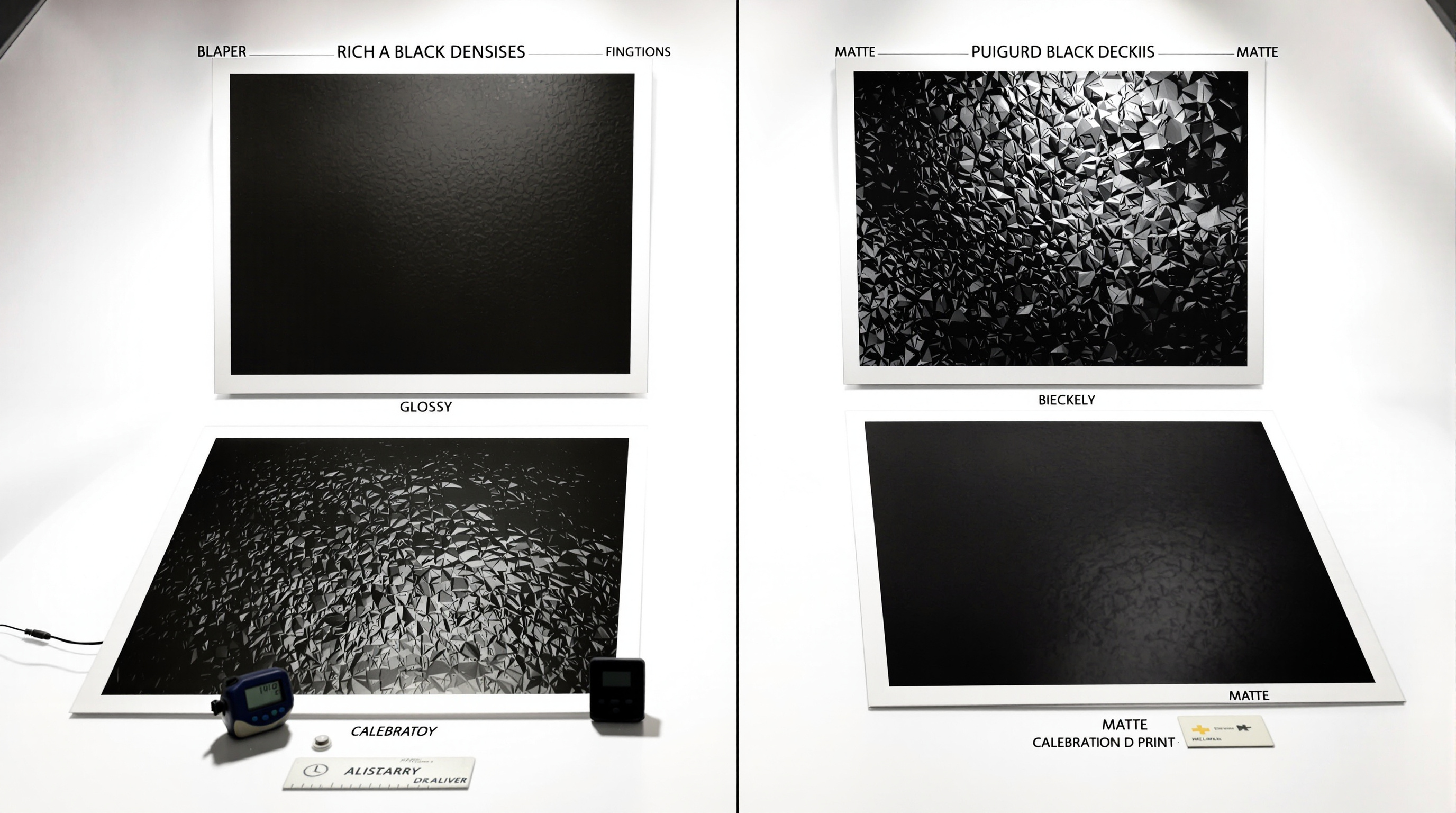
Dmax in Photo Printing: Deep Blacks, Shadow Detail, & Print Quality
In the world of photo printing, few technical aspects are as important yet misunderstood as Dmax — the measurement of a print's maximum black density. Achieving deep, rich blacks while maintaining shadow detail represents one of the greatest challenges in fine art and photography printing. For photographers throughout Kentucky seeking professional-quality output, understanding Dmax is the difference between prints that command a room and prints that fall flat. This article explores the concept of Dmax, its importance in print quality, and practical techniques to help you produce prints with stunning blacks and shadow details.
Understanding Dmax in Photo Printing
Dmax, or maximum density, refers to the darkest black a printing method can produce. Technically speaking, it's a logarithmic measurement of how much light is reflected from the darkest part of a print — the lower the reflection, the higher the Dmax value and the deeper the blacks appear.
Different printing technologies and media offer varying Dmax capabilities:
- Inkjet prints on premium photo papers typically achieve Dmax values between 2.2 and 2.7
- Traditional silver gelatin prints generally reach Dmax values around 2.0 to 2.3
- Dye-sublimation prints often deliver Dmax values between 2.0 and 2.4
- Digital C-prints (chromogenic prints) can achieve Dmax values of 2.3 to 2.5
A higher Dmax value translates to richer, deeper blacks and expanded tonal range, allowing for more subtle gradations in shadow areas. This is particularly crucial for black and white photography, where the contrast between the deepest blacks and brightest whites defines the print's dynamic impact.
Paper Choice and Surface Finish: The Glossy vs. Matte Debate
The choice between glossy and matte finishes significantly impacts a print's Dmax potential and how shadow details are rendered.
Glossy and semi-gloss papers typically offer superior Dmax values because their smooth surfaces reflect light more directly, creating the perception of deeper blacks. The light-reflecting properties of glossy papers enhance the apparent contrast and color saturation, making shadows appear more dramatic and defined.
Matte papers, while generally producing lower Dmax readings, offer different aesthetic qualities that many photographers prefer. The textured surface diffuses light, resulting in a softer appearance with less glare. While the measured Dmax may be lower (often by 0.3 to 0.5 points), matte papers can still produce visually satisfying blacks, especially in controlled lighting environments.
When choosing between finishes, consider these factors:
- Glossy papers maximize Dmax but may show fingerprints and reflections
- Semi-gloss or luster finishes offer a good compromise between Dmax and handling properties
- Matte papers provide a tactile quality and reduce glare but sacrifice some black density
- Fine art matte papers with optical brightening agents (OBAs) can help offset lower Dmax with perceived brightness
Shadow Detail Preservation Techniques
Achieving deep blacks shouldn't come at the expense of shadow detail. Muddy, blocked-up shadows are often the result of poor image preparation or printing techniques. Here are strategies to maintain shadow detail while still achieving rich blacks:
Calibration and proofing
Monitor calibration is critical. Using a hardware calibration device ensures you're viewing accurate representations of your shadows. Calibrate to a brightness level appropriate for print evaluation (typically 80-120 cd/m²) and a color temperature of 5000K-6500K.
Soft-proofing
Soft-proofing is an essential step before printing. Most professional editing software offers soft-proofing features that simulate how your image will appear when printed on specific paper types. As Cambridge in Colour's guide to dynamic range in photography explains, most prints can only reproduce a tonal range of roughly 100:1 — far less than what a monitor displays — making soft-proofing the essential bridge between what you see on screen and what emerges from the printer.
Shadow adjustment techniques to preserve detail include:
- Using the Curves adjustment to create a slight "toe" at the shadow end
- Employing the Shadow/Highlight tool to open up shadows without affecting midtones
- Creating masked adjustments that target only the darkest areas
- Using selective contrast adjustments to maintain local contrast in shadow areas
Lighting Considerations and Environmental Factors
A print's apparent Dmax and shadow detail are dramatically influenced by viewing conditions. The phenomenon of prints "looking different under lighting" isn't just perception — it's physics.
Illumination intensity directly affects how we perceive shadow details. Higher intensity lighting allows us to see deeper into shadow areas, while dim lighting can make shadows appear blocked up. Museum-quality prints are typically displayed under carefully calibrated lighting (usually around 100-200 lux) to balance visibility with preservation concerns.
Light quality matters as much as quantity. Consider these illumination factors:
- Color temperature affects perception of black depth (warmer lighting makes blacks appear slightly warmer)
- High CRI (Color Rendering Index) lighting reveals shadow details more accurately
- Directional vs. diffused lighting dramatically changes how textured papers render shadows
- LED lighting with appropriate specifications has become the standard for professional display
Environmental reflections can undermine even the highest Dmax prints. Matte papers may be preferable in environments with uncontrolled lighting or multiple light sources, as they minimize distracting reflections that can obscure shadow detail. Photographers in smaller Kentucky towns — including those in Owensboro, Elizabethtown, and Ashland without a local fine art lab — often rely on professional labs that offer lab-quality photo prints with the tonal depth and color accuracy that serious print work demands.
For optimal presentation, consider mounting prints behind anti-reflective glass or acrylic, and position lighting to minimize direct reflections from the viewing position.
Conclusion
Mastering Dmax and shadow detail is as much art as science. By understanding the technical foundations, making informed paper choices, employing proper image preparation techniques, and considering viewing environments, photographers can achieve prints with both dramatic black density and nuanced shadow details. For photographers across Kentucky who want to see these principles in action, working with a professional lab that offers film developing and scanning services alongside high-quality print output ensures that tonal depth is preserved all the way from negative to final print. Remember that the ultimate goal isn't necessarily achieving the highest numerical Dmax, but creating prints that convey your artistic vision with impact and subtlety — where blacks are rich and shadows reveal rather than conceal.